How to Play No Results Found
One room, one computer, no painted clues. This is the desktop you actually sit at.
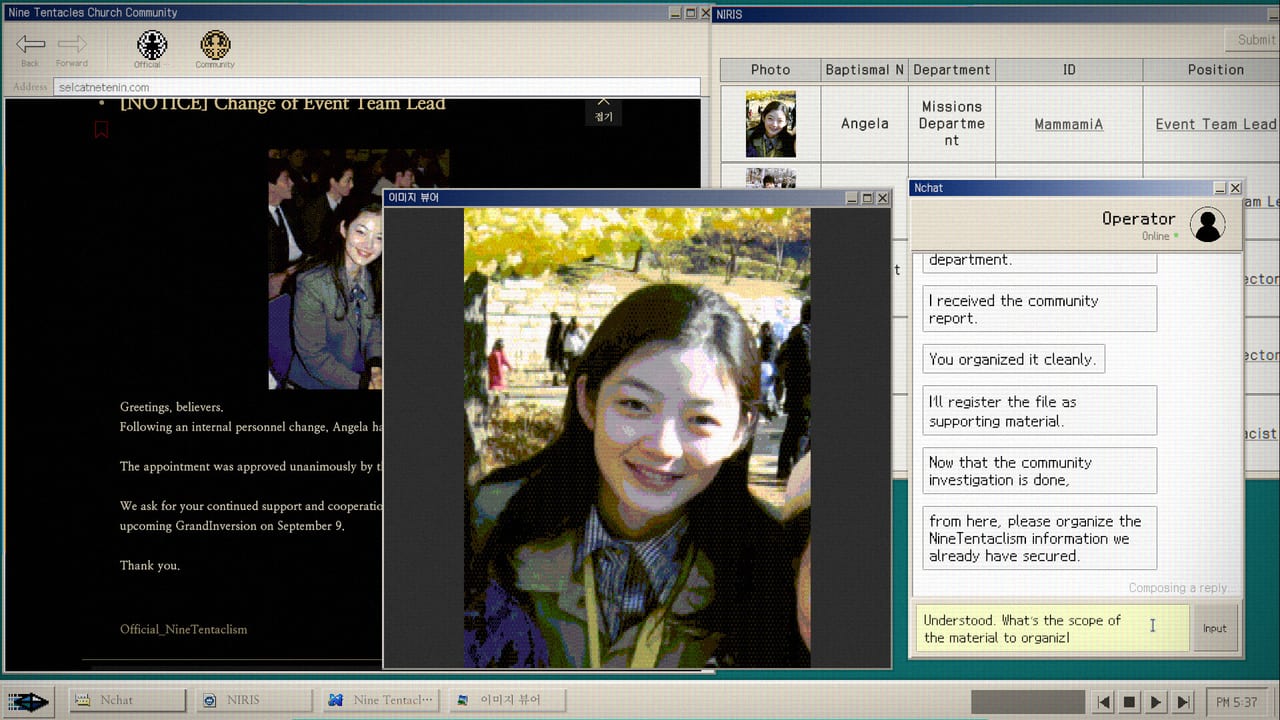
No Results Found is a first-person desktop mystery. You do not walk a city. You sit in a room as a NIRA religious-studies researcher and reopen a closed drowning case. Steam’s store page is blunt: one computer, one room, records that were never fully erased. The Church of the Nine-Tentacled Octopus lost 227 people in a ritual. Families want the file reopened. Your job is to search until the official story cracks.
This page is the onboarding the game refuses to give you. It does not list every community URL. For that, use Hidden Community or the Walkthrough. For the search loop itself, keep How to Search open in another tab.
What you are looking at
The room is a framing device. Time still passes. Days move. The interesting verbs all live on the monitor: a browser, cult websites, chats, email, a file explorer, photos, notes, and an organization-chart program. Official copy also mentions everyday objects in the room as search bait. If a snack wrapper, a CD, or a sticky note sits in the physical space, treat it as a query, not set dressing.
Controls are mouse and keyboard. You click windows, type into a search field, scroll posts, open attachments, and pin people on the chart. There is no gamepad promise on the Steam spec sheet. Minimum PC specs are light (Windows 10 64-bit, an old dual-core, 8 GB RAM, 2 GB disk). The System Requirements page copies the store list and adds what actually matters: you will be reading small UI text for two hours.
The first hour, in order
Start by inventorying the desktop the way a real analyst would. Open every visible program once so you know what exists. Mail gives dates. Files give locked folders and photos. The memo is not flavor: the achievement Write First, Think Later exists specifically because the notepad is a designed tool. The org chart is how you cash in names. The browser is where 90 percent of the case lives.
Do not wait for a quest marker. Steam says important clues are not highlighted. The trailer from ZzangdolGames shows the same idea in motion: you type, you get a page, you type again. If a post looks like a joke, search the punchline. If a photo has a street sign, search the sign. If two people use the same slang, search the slang.
When the public cult homepage appears, you are still in the tutorial even if the game never says so. Masks, commandments, and ridiculous events are the vocabulary of the Church. The members-only board is nested behind that public face. Finding the address is the first real wall; the Hidden Community page is dedicated to it because Steam already has a thread titled around that exact problem.
How a session should feel
A healthy session looks like this. You read a cluster of posts. You write three candidate strings in the memo. You search them. One misses. One returns a profile. You put that profile on the organization chart. You search the new name. You notice a date on an email that does not match a story someone told in chat. You search the date. That is the whole game, scaled up until you can file a report.
A stuck session looks like mash-searching random English words. The engine is not a web-scale index. It is a closed mystery with a finite set of keys. If ten guesses return nothing, you are missing a token that is already on screen: a username, a misspelling, a Korean/English pair, a photo object. Launch reviews call out Marco versus Makor. Search the version the documents actually use.
Chat logs can auto-advance. One English review said the last messages skipped. Screenshot or pause with the memo if a conversation starts rolling. The same review said the final report can advance before you finish reading. That is a presentation quirk, not a fail state, but it is why people miss ending flavor.
What “winning” means
There is no raid boss. You win when you can identify the people on the chart and file the report. Hidden achievements Accuse and Connive track the two main outcomes; the Endings page covers them. Side goals are optional and mean: search a hundred times, listen to the music, play DODGE, and read most of the community. Those sit on the Achievement Tracker.
If you want the case bible instead of the verbs, read NIRA and the Church file. If you want a critic’s take after you finish, use the Review. The official trailer below is the developer’s own pitch, not a walkthrough.
Common first-hour mistakes
People click only highlighted-looking buttons and then decide the game is broken. Nothing is highlighted. People ignore comments under posts. Comments are where usernames and in-jokes hide. People never touch the memo and then lose the thread of a three-name chain. People skip the room and only live in the browser, then miss a snack or disc the store page is literally trolling you to search.
Play in the language you can read fastest. Steam ships English, Korean, and Japanese. The cult’s in-jokes were built in a Korean internet register, so some flavor hits harder in Korean, but the investigation loop is the same in all three.
When you are ready to type, go to How to Search. When the public site will not give you the private board, go to Hidden Community.
Frequently Asked Questions
Quick answers for investigators who just hit a dead search.
Is there a tutorial or hint button?
No. Clues are not highlighted. The wiki's How to Search page is the closest thing to a hint system the game will not ship.
Do I need a controller?
No. It is a mouse-and-keyboard desktop. You click windows and type queries. Steam lists Windows only.
How long is the first playthrough?
Reviews cluster around two to two and a half hours if you do not stall on a keyword. Achievements and both endings take longer.